
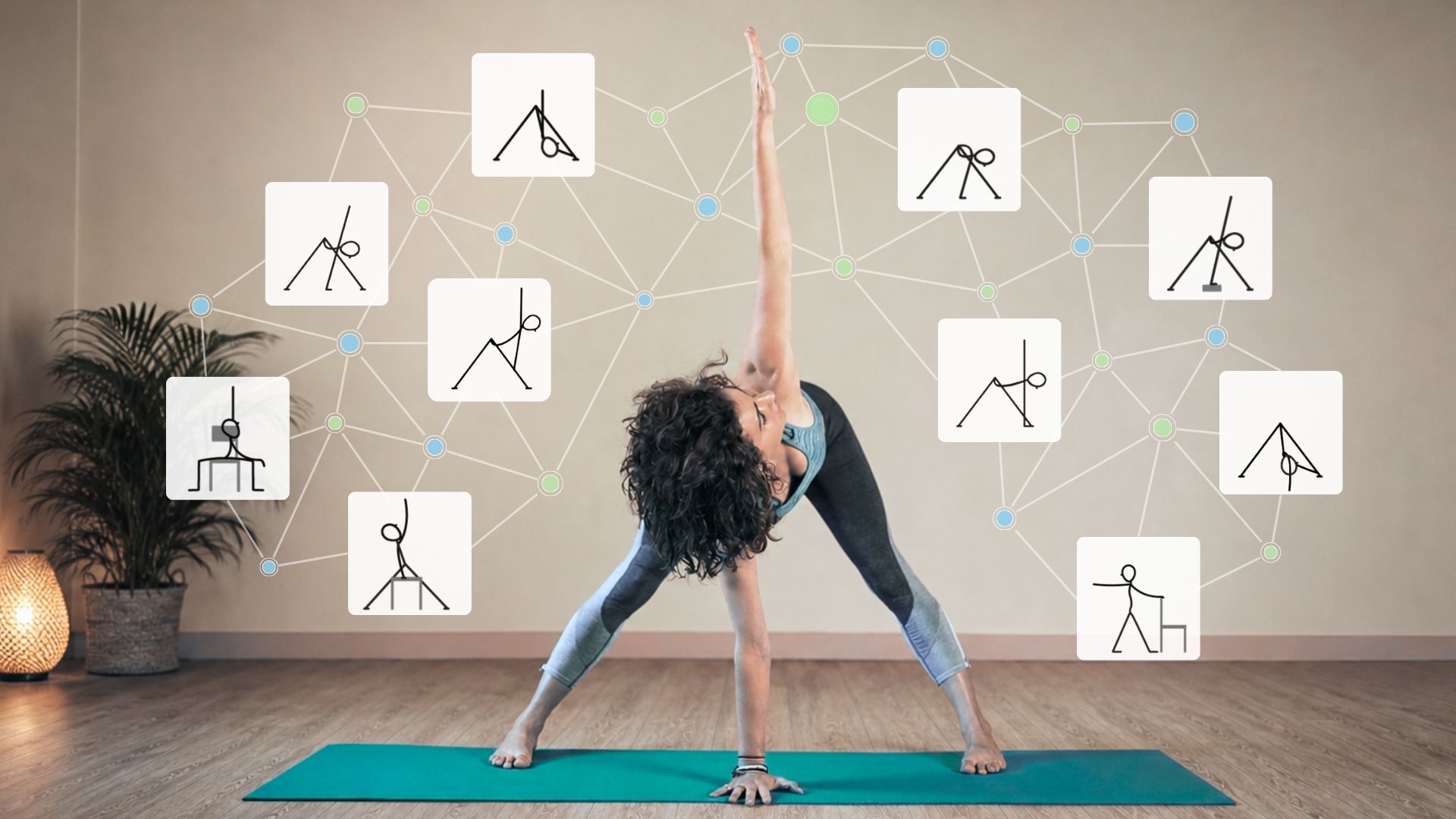
Many of us learned how to do each yoga pose in a very particular way: the legs go here, the arms go there, we hold it for a few breaths and move on to the next pose.
This works great at the beginning, but after a while it stops serving us. Maybe the classical form of the pose doesn’t do it for you because your shoulders are tight, or maybe you cannot be on your knees because of a previous injury. We need options that still deliver the same benefit the pose is meant to give us. And if we teach yoga, we need to be able to give our students pose options, so that they feel comfortable, supported, and included in the yoga class no matter what challenges they are dealing with, and get the same benefits as everybody else. If we work therapeutically, with students who face a variety of limitations, we need enough versions of each pose to keep the practice safe without giving up its effectiveness. This is why we adapt the classical form of postures to make them accessible to different students.
However, accessibility is only one reason to modify the form of the pose. We can also change the shape of the pose slightly by repositioning the arms or legs to alter the entire effect of the pose, or to target a specific body area. Some poses, Warrior 1 for example, have 10–15 different versions without any additional props, and each version works a different part of the body. You can also use different versions of simpler poses to prepare for more difficult ones efficiently, or to manifest an idea when you are creating an integrative practice with a specific theme. Pose adaptation is one of the most underutilized and most effective tools we have for achieving very specific structural, energetic, and mental-emotional effects in our yoga practice.
Yoga Pose Adaptations: Unlock the Hidden Potential of Familiar Poses is a webinar series that shows you how to get more out of the poses you already know. It is based on a simple premise: yoga poses are tools, and we can use these tools for our own purposes, so that our practices become more precise, more effective, and more purposeful.
We cover 35 common yoga poses, defining the purpose of each pose, the basic points of body positioning that keep it safe, what can be changed in a pose, and what each change actually does for the body. We explore three main strategies for choosing pose adaptations and how to apply them to create practices that serve your own or your students’ unique needs.
The series consists of two one-hour webinars, a comprehensive 175-page reference e-book, and twelve sample practices that illustrate different ways to use pose adaptations. You will come away with a deeper understanding of what pose adaptations are and how to use them, plus a large collection of adaptations for 35 yoga poses.
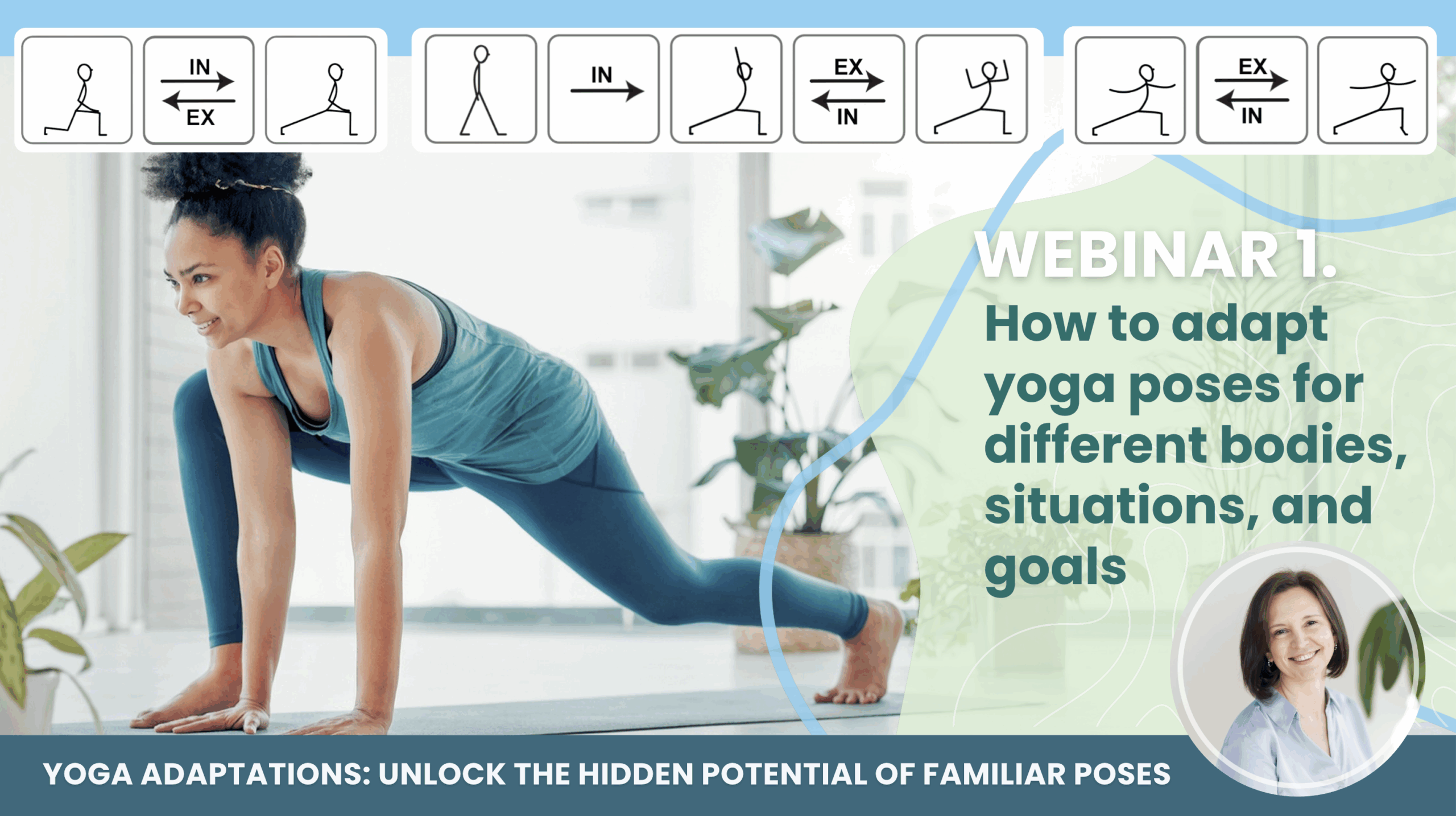
Webinar 1: How to adapt yoga poses for different bodies, situations, and goals
We explore what makes pose adaptations so powerful. You will learn what superposes and near-supers are, and how to select specific pose variations to adapt the pose to the student’s limitations. We then examine how variations of the same pose can target completely different parts of the body, and demonstrate how to build an entire practice from different versions of a single pose. By the end you will be able to look at a familiar pose and see ten or more versions hiding inside it.
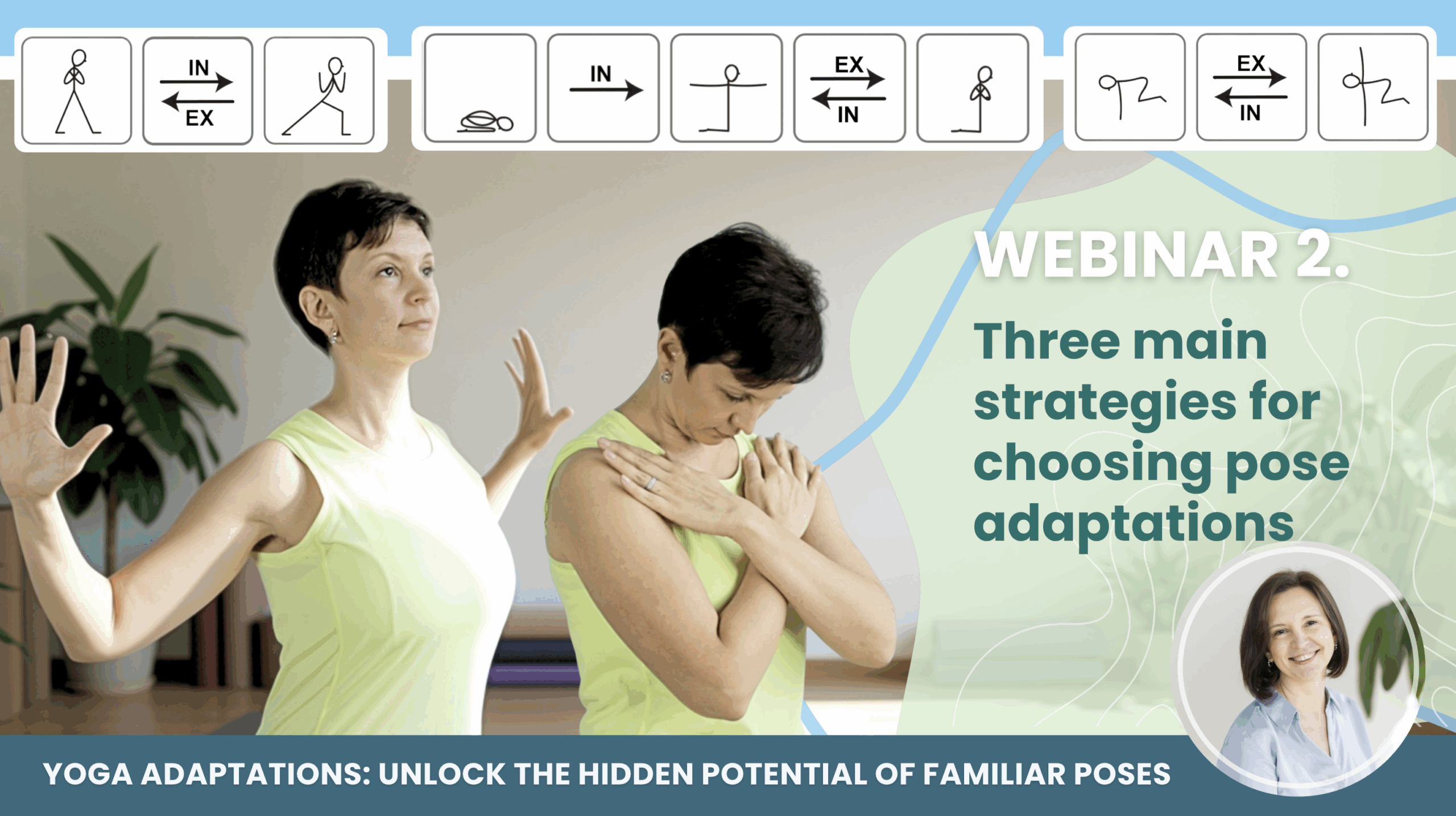
Webinar 2: Three main strategies for choosing pose adaptations
In this webinar we move into the practical application of the three strategies that guide that choice: accommodating the student, manifesting your intention for the practice, and getting the most out of the adaptation movement itself. We illustrate each one with extensive examples, including 18 versions of Warrior 1 and 15 versions of Bridge pose.
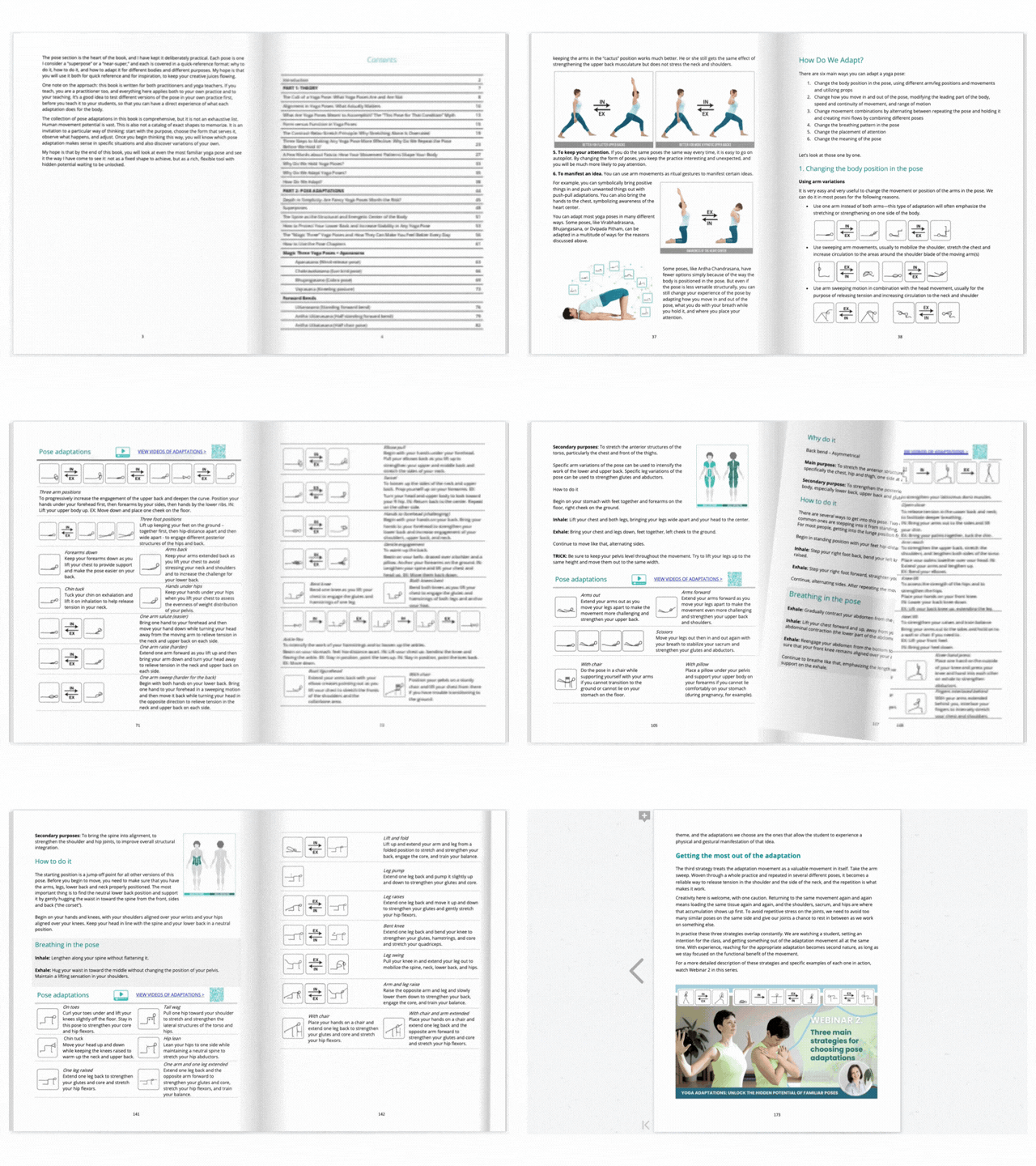
About the 175-page e-book
The webinars teach the reasoning and give you examples. The e-book is what you can keep handy and go back to when you are planning your next yoga practice or wondering what to do about a student who complains about neck tension.
Part 1 covers the theory behind adaptations: what yoga poses are actually for, which alignment points are important, why we repeat a pose before we hold it, how fascia responds to the way we habitually move, and the six main ways we can adapt any yoga pose.
Part 2 is the working reference. It features thirty-five pose chapters, and each chapter includes the key alignment points of the pose, why we do it, how to do it, how to bring the pose to life with your breath, and an extensive collection of pose adaptations. Every adaptation is represented by an image, a name, and a short description of what it is and what it is used for. At the top of the list, there is a link and a QR code that lead to a webpage with videos of the same pose adaptations.


